
Meet White Shaker: The Cabinet Style Born From People Who Shook
Before “Shaker” was a cabinet style, it was an insult.
In the 1700s, a small religious community in New England worshipped with such intense, trembling movement arms shaking, bodies swaying that outsiders started calling them “Shaking Quakers,” later shortened to Shakers. They turned it into their name. Then they turned their whole philosophy simplicity, honesty, “hands to work, hearts to God” — into furniture. No carving for carving’s sake. No ornament without purpose. Just clean lines and joints built to outlast the people who made them.
Three hundred years later, that same five-piece door design is still the most requested cabinet style in America. Meet White Shaker our version of the original, in a crisp, bright white that works in literally any kitchen.
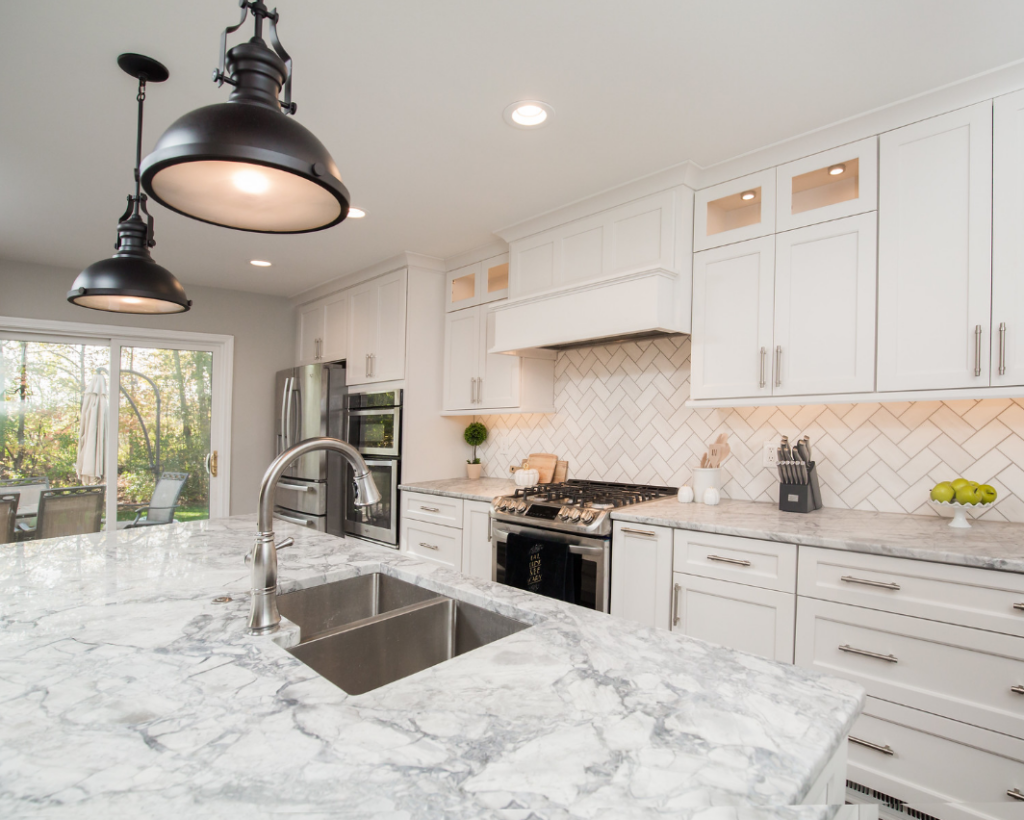
White Shaker is the disciplined, no-nonsense type
What it’s made of: 3/4″ solid birch hardwood doors and frames, painted in a clean white finish the same construction principle the Shakers themselves valued: strong materials, no shortcuts.
How it ages: A quality painted finish on solid wood doesn’t yellow or chip the way cheaper MDF or thermofoil doors can over time it stays crisp for the long haul.
How to keep it happy: A soft cloth and mild soap. Avoid abrasive cleaners that can dull the painted sheen.
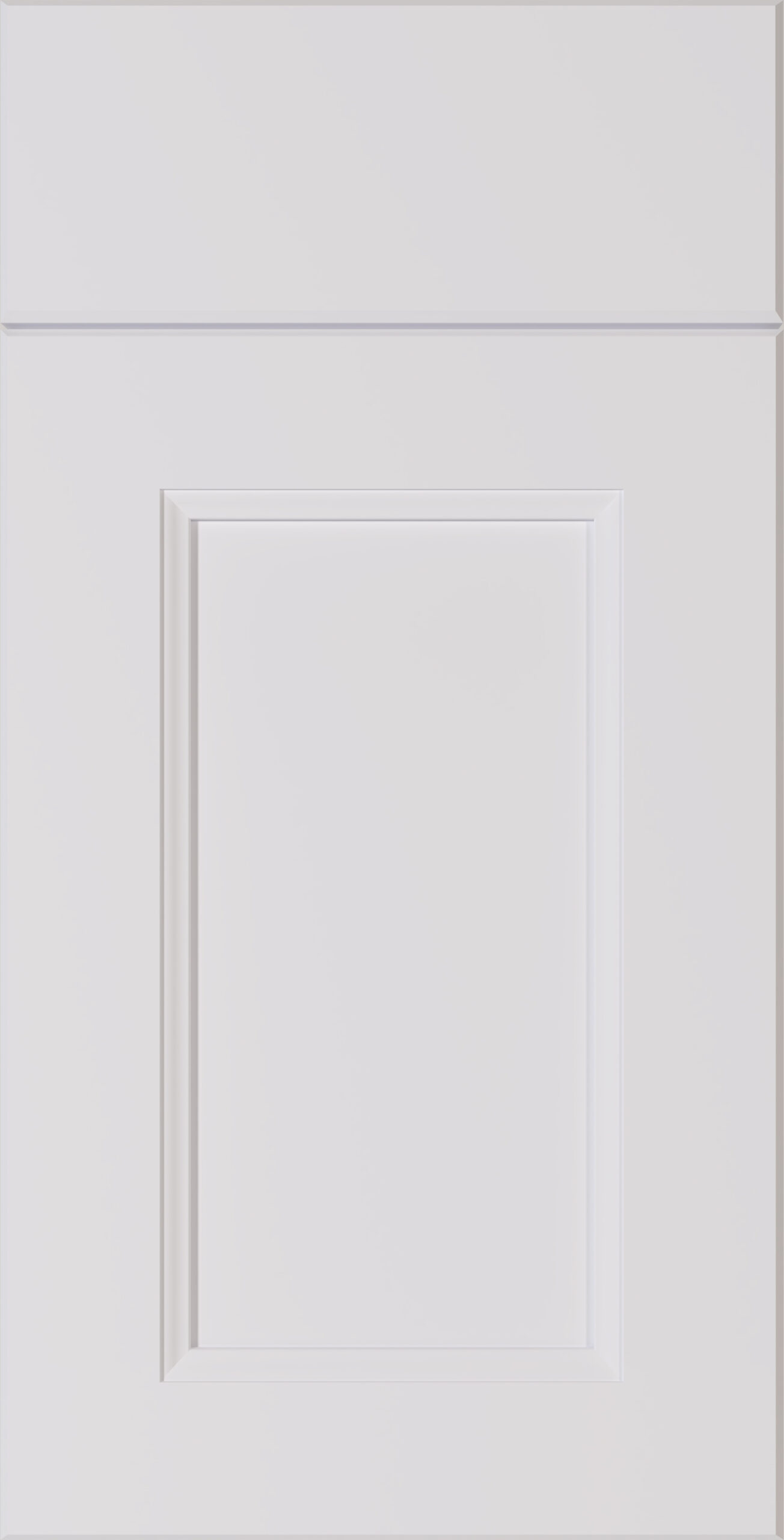
What to expect: A completely uniform, matte-to-satin white surface — no grain showing through, no two doors “matching differently.” What you see in the sample is what you get on every door.
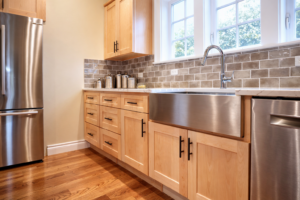
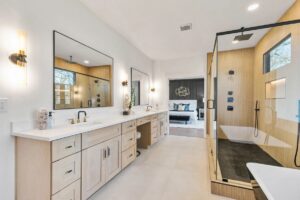
Where it shines: Literally everywhere. Farmhouse, modern, transitional, coastal White Shaker is the rare style that never fights the rest of the room.
The Door Itself Is the Whole Story
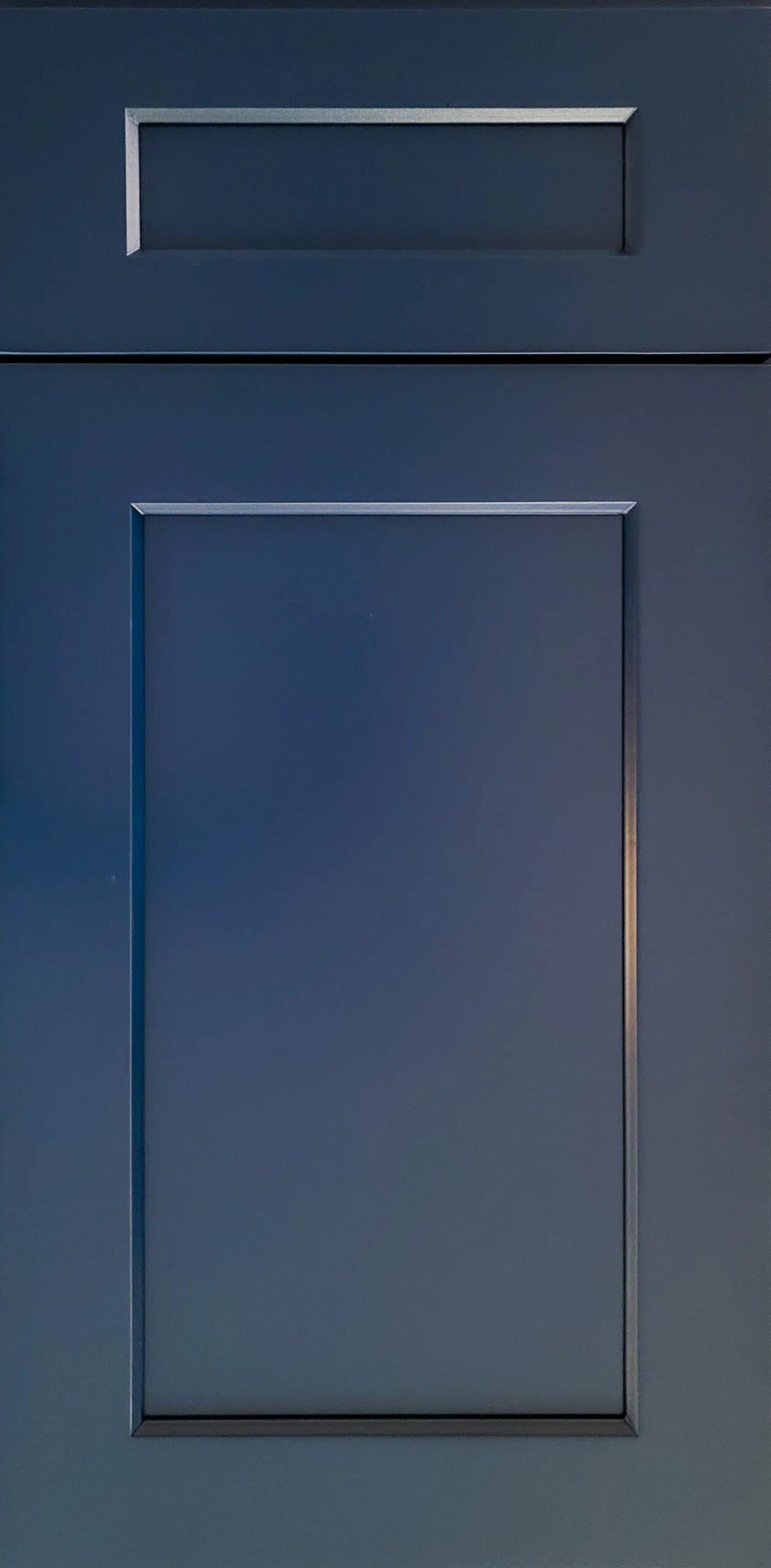
Flip open a Shaker cabinet and the design logic is right there in the door: a five-piece frame two rails, two stiles, and a flat recessed center panel. No beading, no scrollwork, nothing to catch dust or hide grime. It’s a design that solves a problem (a durable, easy-to-clean door) instead of decorating around one which is exactly why it’s lasted this long. The Shakers weren’t chasing a look. They were building something that worked, and it turned out to also look right for the next three centuries.
A Neutral That Plays Well With Everyone
White Shaker’s biggest strength is what it doesn’t do — it doesn’t compete. A few pairings that work every time:
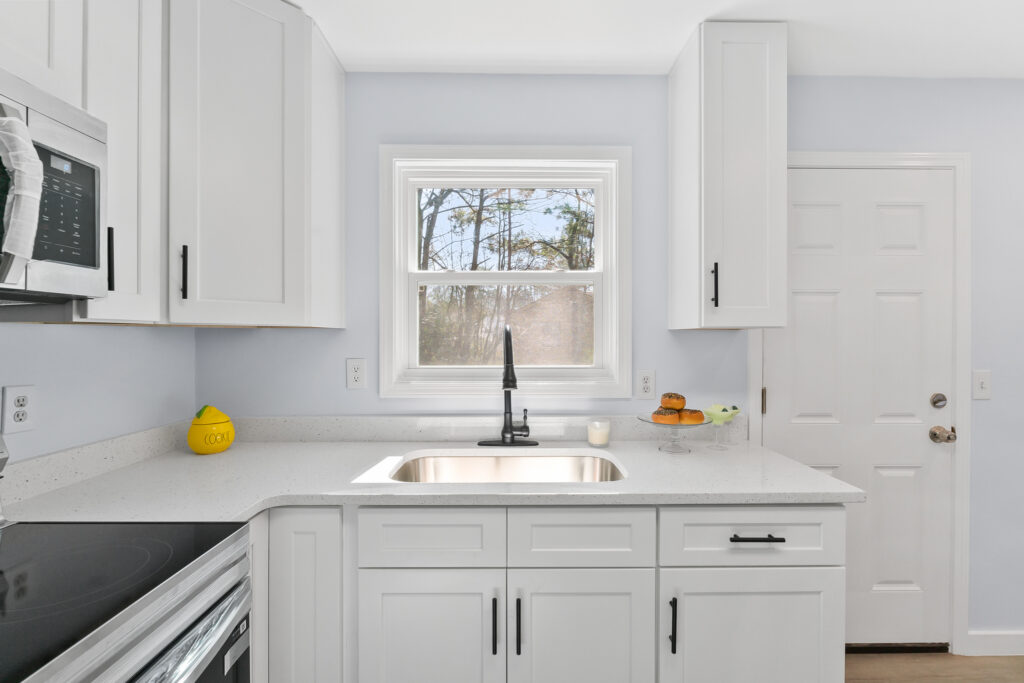
White Shaker + matte black hardware — for a sharp, modern contrast that reads clean and current
White Shaker + brushed brass or gold — for a warmer, slightly more traditional feel
White Shaker + a bold island color — White Shaker perimeter cabinets with a contrasting island is one of the most requested two-tone combinations right now
White Shaker + natural wood open shelving — breaks up an all-white kitchen without losing the clean look
Classic White or Something Warmer?
White Shaker is the safe, timeless choice the cabinet equivalent of a white t-shirt. It resells well, photographs well, and never dates a kitchen the way a trend color eventually can.
If you want warmth instead of crisp white, our Sunny Maple finish (see our last post) gives you the same clean lines with a honey-toned natural wood look instead.
Simple, on Purpose
There’s a reason “simple” and “cheap” aren’t the same thing here. A flat panel door with nothing to hide behind means every joint, every corner, and every coat of paint has to be right there’s no carving or ornament to distract from a shortcut. That’s the whole Shaker philosophy in one cabinet door: nothing unnecessary, nothing missing.
See It in Person
White looks different under every kitchen’s lighting. If you’re a contractor or dealer working on a project, reach out to our team for a White Shaker door sample, or stop by our Peachtree Corners warehouse to see it next to our other finishes.