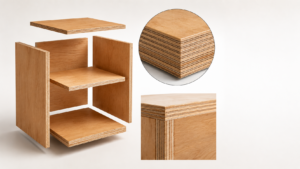

Solid Wood vs. Thermofoil vs. Veneer: What’s Actually in Your Cabinet Door?
Two cabinet doors can look nearly identical in a showroom and age completely differently five years later. The difference usually comes down to what’s under the finish and most buyers never think to ask.Here’s what’s actually behind these three common cabinet door materials, and how to tell which one you’re looking at.
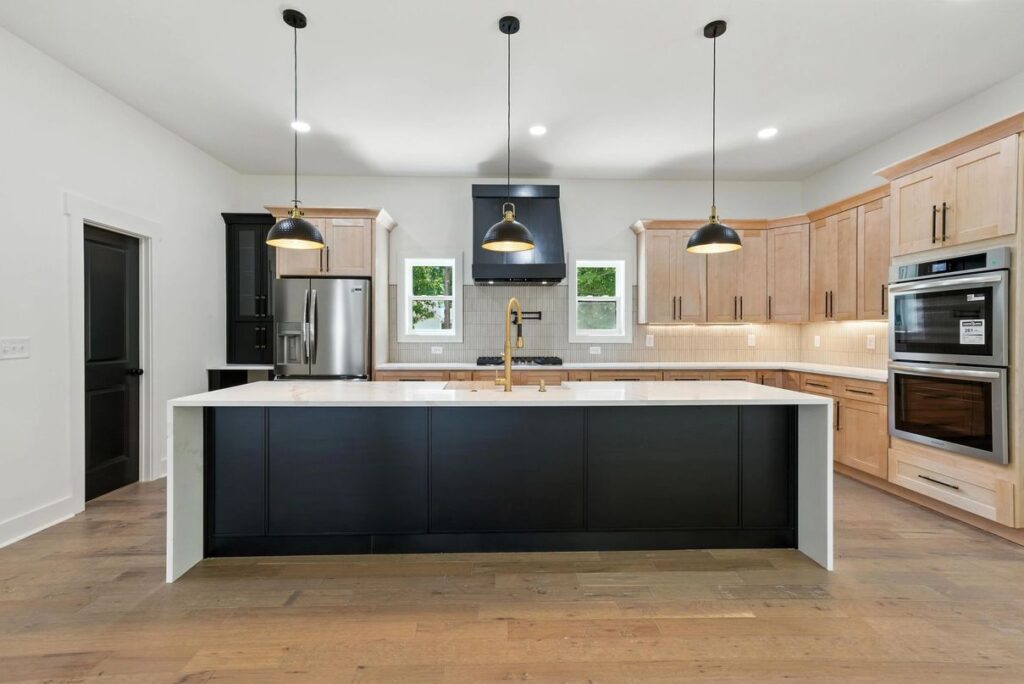
Solid Wood: The Real Thing
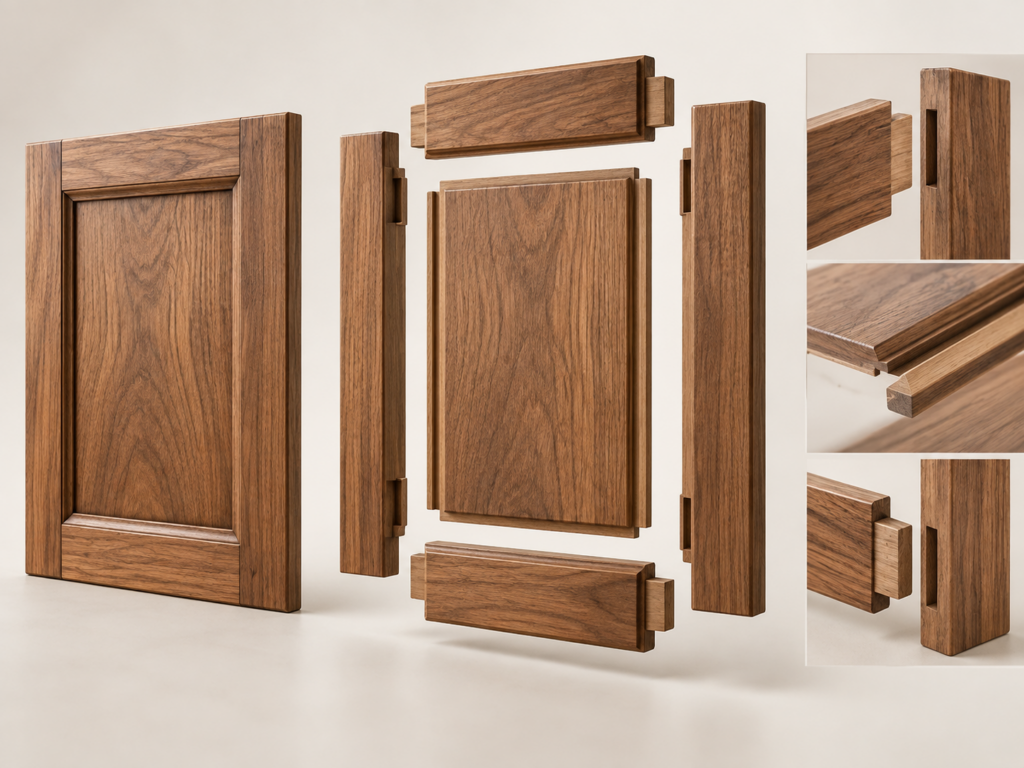
Solid wood doors are exactly what they sound like cut, milled, and assembled from real hardwood (maple, oak, birch, cherry, and similar species). The frame-and-panel construction you see on a Shaker door — rails, stiles, and a center panel is a giveaway that you’re looking at real wood, since that joinery is how solid wood expands and contracts safely with humidity.
Pros: Can be sanded and refinished over time; holds up to heat and daily wear; genuine grain and texture that varies slightly door to door. Cons: Costs more than engineered alternatives; needs a proper stain or paint finish; can expand and contract slightly with humidity if not properly constructed. Lifespan: With reasonable care, decades solid wood cabinetry can easily outlast the kitchen it’s installed in.
Thermofoil: The Budget-Friendly Shortcut
Thermofoil isn’t wood at all it’s a thin vinyl film heat-sealed and vacuum-pressed over an MDF (medium-density fiberboard) core. The result is a smooth, seamless surface, often in solid white or an embossed wood-grain pattern, that arrives factory-finished with no staining or painting required.
Pros: Lower upfront cost; smooth, seamless look with no visible wood grain if you want a clean painted appearance; resists staining on the surface. Cons: Vulnerable to heat and moisture warping and peeling near ovens, dishwashers, or humid climates is the most common thermofoil complaint; can’t be refinished once it’s damaged, only replaced. Lifespan: Typically 10–15 years under normal use, shorter in high-heat kitchens.
Veneer: The Middle Ground
Wood veneer is a thin slice of real wood often less than 1mm thick bonded to a more stable core like plywood or MDF. It gives you genuine wood grain and a real-wood look at a lower material cost than a solid wood door, since you’re using a fraction of the actual hardwood.
Pros: Real wood grain and appearance; more dimensionally stable than solid wood, since the core resists warping; typically less expensive than solid wood. Cons: More delicate than laminate or thermofoil chips or deep scratches can expose the core underneath; refinishing is possible but has to be done carefully since the wood layer is thin. Lifespan: Generally 15–25 years depending on the core material and how well it’s sealed.
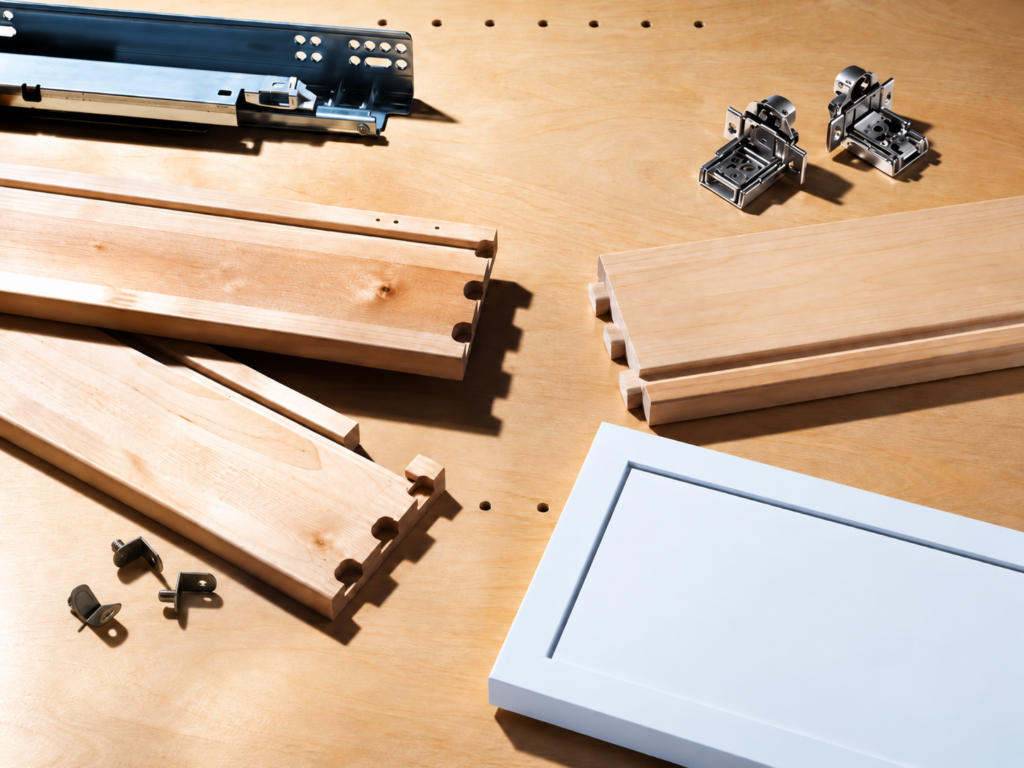
Quick Comparison
Solid Wood Thermofoil Veneer
Real hardwood Vinyl over MDF Thin real-wood layer overplywood/MDF
Genuine grain, uniform, paint-like Genuine grain, slight variationSmooth
Yes No Limited
25+ years 10–15 years 15–25 years
Highest Lowest Mid-range

How to Tell What You’re Actually Looking At
Check the edges. Solid wood and veneer will show a visible seam or edge banding where panels meet; thermofoil is seamless all the way around.
Ask about the core. If a salesperson can’t tell you what’s underneath the surface finish, that’s worth a follow-up question.
Look at the weight. Solid wood doors generally feel heavier and denser than thermofoil-wrapped MDF of the same size.
Ask what happens near heat. Thermofoil near a range or oven without proper ventilation is the single biggest complaint homeowners report a few years in.
Which One Should You Choose?
If you want a kitchen that can be refinished instead of replaced, and you’re not choosing purely on upfront price, solid wood is the long-term play. If budget is the top priority and you’re comfortable replacing doors down the road, thermofoil gets the job done for less. Veneer sits in between real wood character at a lower material cost, with a bit less forgiveness if it’s damaged. ——-Check our cabinet features—-
At Lighthouse Cabinetry, every cabinet line we carry uses solid hardwood doors no thermofoil, no shortcuts because we’d rather sell something that holds up in five years than something that just looks good in the showroom today.