
White vs. Black Kitchen Cabinets: Pros, Cons & How to Choose in 2026
It’s one of the most searched questions in kitchen design: white or black cabinets? Both have had their moment, both have passionate advocates, and both can look stunning in the right kitchen. But they behave very differently in real life — and the right choice depends less on trend and more on your specific kitchen.
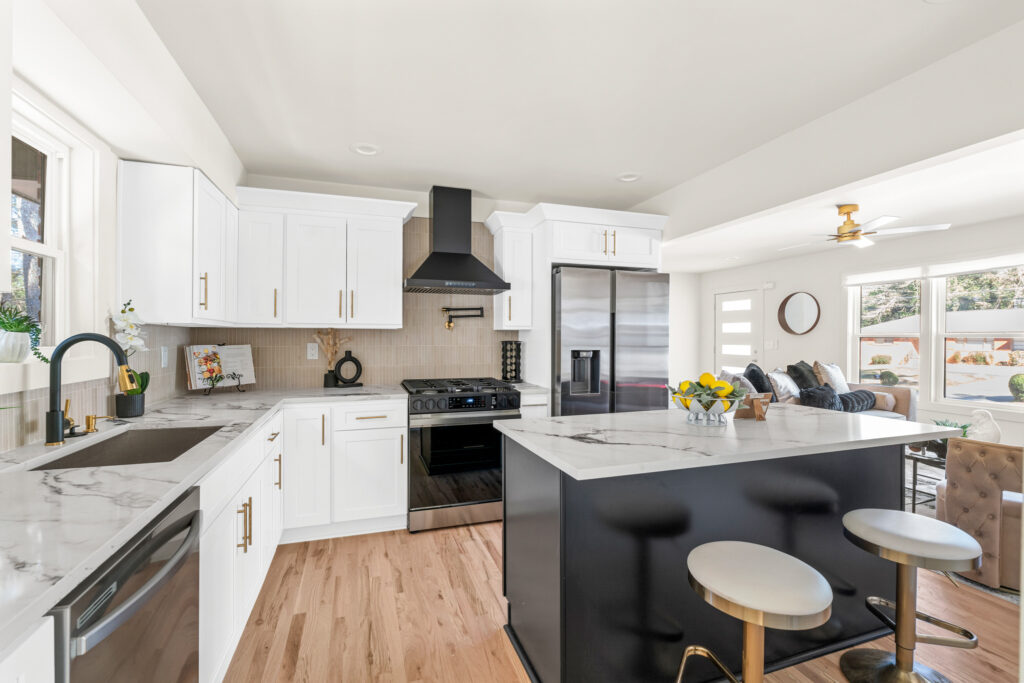
The Case for White
White cabinets have dominated kitchen design for decades, and there’s a reason they’ve stayed popular: they work.
Light and space. White reflects light, making kitchens appear larger and more open. In smaller kitchens or rooms with limited natural light, this isn’t a minor benefit — it can be the difference between a kitchen that feels cramped and one that breathes. White cabinets reflect light, making kitchens appear larger and more open.
Versatility. White works with virtually every countertop material, hardware finish, backsplash style, and flooring color. It’s the most forgiving backdrop you can choose — and it gives you maximum flexibility to change other elements over time without a full cabinet overhaul.
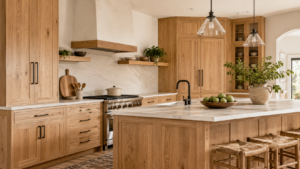
Resale value. Both warm white and white oak give you strong resale flexibility — white cabinets appeal to the broadest range of buyers, which matters when it’s time to sell.
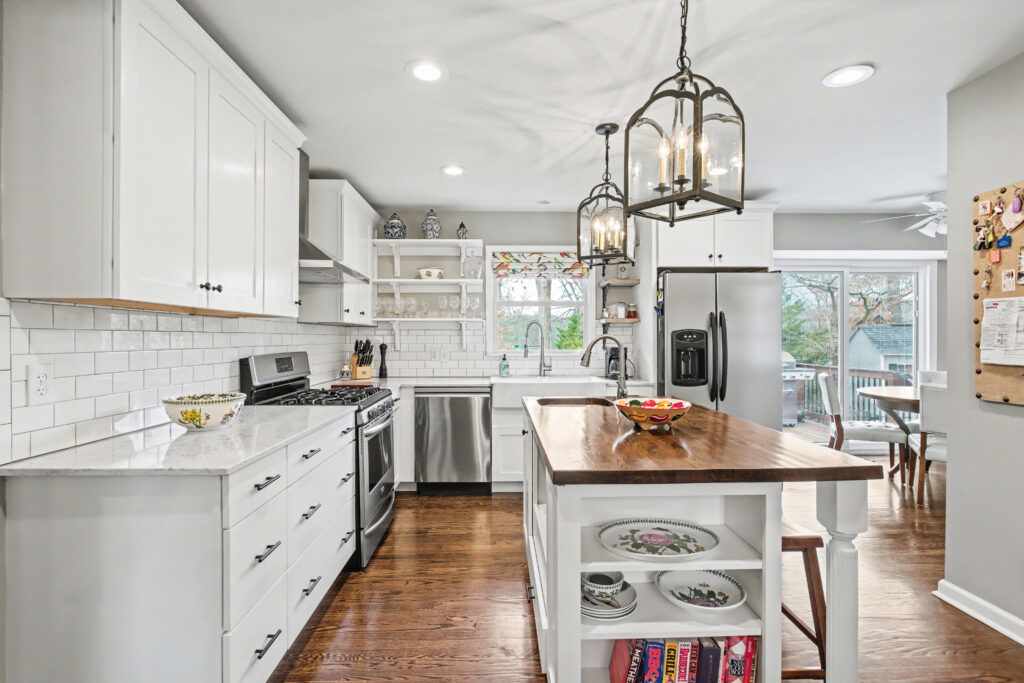
The caveat. Designers say stark white cabinets are moving out of fashion in 2026 — not white itself, but the cold, clinical version. The update that keeps white kitchens feeling current is simple: swap stark white for a warm white with creamy or soft undertones. Same versatility, more personality.
Our White Shaker hits this sweet spot — warm enough to feel inviting, clean enough to stay timeless.
The Case for Black
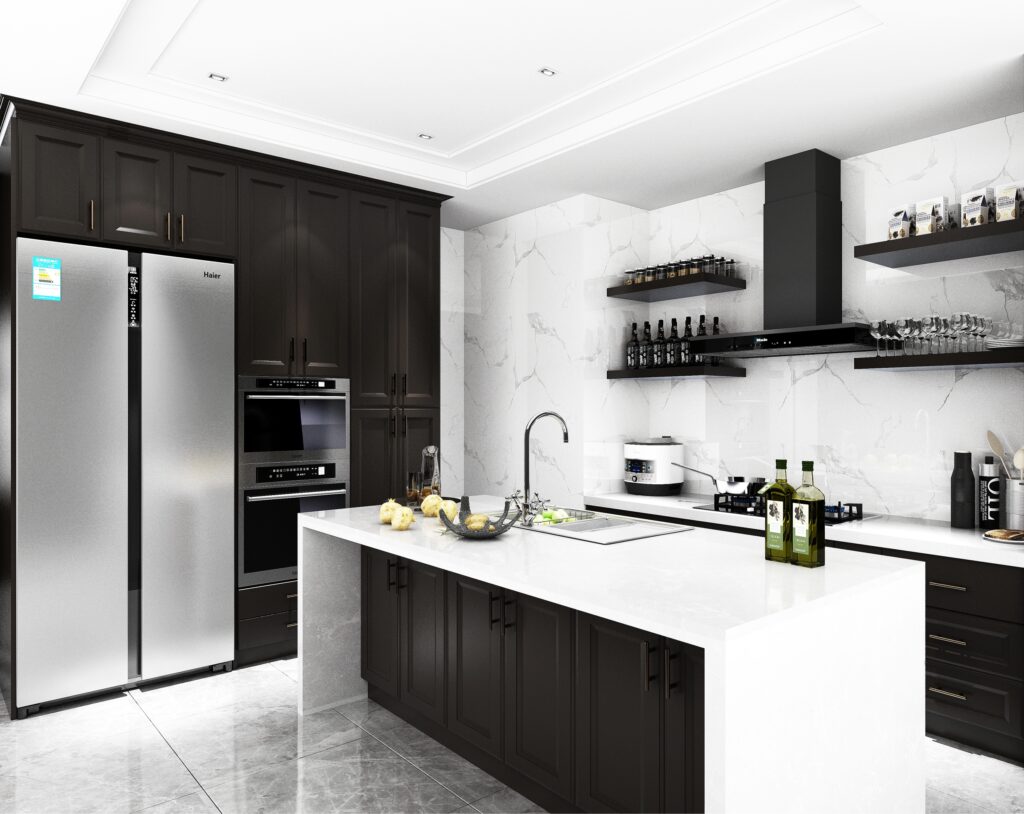
Black cabinets make a statement. Done well, they’re among the most striking kitchens you’ll see.
Sophistication and drama. Dark cabinets instantly elevate a kitchen — they feel intentional, luxurious, and grounded. When paired with high-contrast elements like a bright quartzite countertop or warm wood shelving, they create a look that white struggles to replicate.
Hides everyday wear. Black and dark cabinets are more forgiving with grease, scuffs, and the general wear of a heavily used kitchen. Black is great for hiding everyday wear and tear.
The caveat. Black cabinets can reveal dust and fingerprints, especially on glossy surfaces. Matte black finishes are significantly more forgiving. And black in a small or low-light kitchen can make the space feel closed-in — it works best in larger rooms with good natural light or strong artificial lighting.
Designers also note that all-black cabinets are among the colors moving out of trend in 2026 if used as the sole element — the stronger approach is to layer black with interesting materials, warm wood accents, or as a two-tone combination rather than across every surface.
How to Choose
Kitchen size and light: Smaller or darker kitchen? White is the safer call. Larger space with good light? Black becomes viable — and dramatic.
Your lifestyle: Cook heavily? Black hides grease better. Have young kids? White shows handprints more readily. Neither is objectively better, but knowing your habits matters.
Resale vs. personal use: Designing to sell? Warm white is the broadest-appeal choice. Designing for yourself? Black can be a genuinely stunning long-term decision if the space supports it.
Finish matters more than color: A matte black cabinet reads completely differently from a gloss black. A warm creamy white feels nothing like a stark clinical white. Before committing to either direction, look at actual finish samples in your specific kitchen light — not just photos online.
The Two-Tone Middle Ground
If you love both, you don’t have to choose. Two-tone kitchens — white or light uppers with black or dark lowers — are one of the most popular directions in 2026 and for good reason: you get the brightness and openness of white where it matters most (eye level and above) and the drama and grounding of dark where it anchors the space.
It’s also practical: lower cabinets take more daily abuse, so a darker finish there is easier to maintain.
White is timeless, versatile, and the safest choice for most kitchens and most homeowners. Black is bold, sophisticated, and stunning when the space supports it.
In 2026, the strongest version of either isn’t the extreme — it’s the nuanced one. Warm white over stark white. Matte black over gloss black. Or both together, layered with intention.